
Silver and its Importance in the Festering Lands
InSilver game,has silveredchanged weaponsfrom willordinary dealwealth aninto additionalone 1d8of damageNorvostra's againstmost anyimportant creaturesurvival infectedresources. withIt is the Rotmireonly Blight.material Thiswidely effectknown canto stackpermanently withdisrupt Relicfully weaponsturned suchBlighted ascreatures, +1making weapons,it etc.at once a weapon material, emergency reserve, political asset, religious symbol, and target for theft.
Once,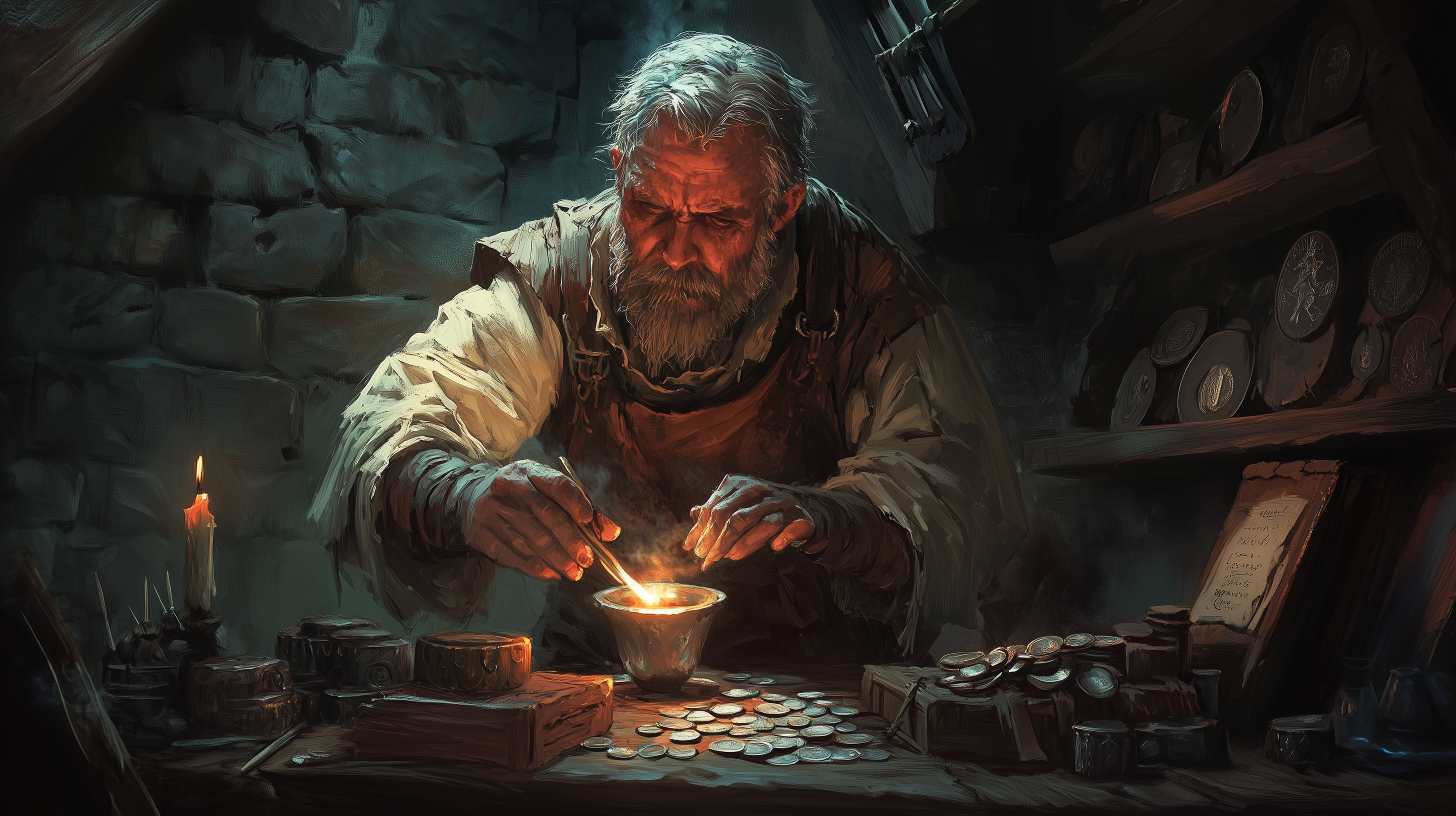
Everyday aImportance
Before the Rotmire Blight, silver hascirculated becomeas somethingcoin, farornament, greater—andsacred far deadlier. No longer a currency of trade, silver is now the currency of survival. It is no longer bartered for luxury but for life itself.
As the Blight took hold of Norvostra, it became clear that conventional weapons were of little use against the afflicted. Swordsmaterial, and axesstored cutwealth. through their flesh, but the wounds closed as if the very disease re-knit their bodies from within. The dead did not stay dead. Yet, when a desperate warrior drove a silvered dagger into the skull of a risen corpse, it did not stir again. Word spread like wildfire—silver was the key. Not only did it slay the Blightborn with finality, but it also seemed to burn the infection from the bodies of the afflicted, searing them as though it carried the wrath of the gods themselves. Whether by divine providence or some unknown force, silver alone could keep the horrors at bay.
With this revelation, silver ceased to be a mere commodity. Nobles and anyone of means melted down their coinage, reforging wealth into weapons. Blacksmiths, once craftsmen of utility and artistry, became the most vital figures in society, sought after by nobles and commoners alike. The mines that once produced silver for trinkets and coin were now battlegrounds, their control more valuable than entire fiefdoms. House Harrowden, once overlooked as a lesser power, now found itself indispensable, its dominion over the silver-rich Thornmere Mines giving it an authority that even House Valkenmar could not ignore. The veins of silver buried deep beneath the land became the lifeblood of any kingdom that wished to stand against the tide of undeath.
As silver grew rarer, so too did trust. A single silver dagger was worth more than a chest of gold, and men would kill for a handful of silver shavings. The market for counterfeit weapons flourished, with desperate warriors falling prey to blades that shattered upon their first strike. Smugglers and brigands made fortunes ferrying silver ingots across quarantined lands, risking the noose for a chance at riches beyond measure. To hold silver was to hold power, and to hold power in the time of the Blight was to paint a target upon one’s back.
But silver was more than just a weapon—it became a talisman against despair. Villages lined their doorways with slivers of it, hoping to ward off the sickness that lurked beyond their walls. Healers mixed powdered silver into their tinctures, praying it would cleanse the body before the Blight took hold. Priests of the Old Ways declared it sacred, a gift from the gods meant to combat the darkness. Whether through faith or desperation, silver was no longer just a metal—it was salvation.
Now, inIn the second year of the Blight, households, soldiers, smiths, smugglers, and nobles increasingly treat usable silver isas something closer to ammunition.
Across affected regions, old coinage and household silver are melted down, silvered weapons are guarded more closely than scarce;ordinary it is mythic. The mines are nearly dry, their riches exhausted by warvaluables, and greed.metalworkers Thosecapable whoof stillpreparing possessor applying silver weaponshave guardbecome themstrategically asimportant.
Counterfeit assilver, theirfalsely ownadvertised lives.weapons, Bandsscavenging expeditions, and black-market trafficking have followed naturally. Possessing silver can offer protection while making the bearer a tempting target.
Politics and Scarcity
The greatest political consequence of mercenaries scour the land in search of forgotten stashes, while scavengers dig through the ruins of old cities, hoping to unearth a single, tarnished coin. To wield silver is to hold onto hope, and in a world where hope is in short supply, its worth cannot be measured in gold or copper. Itscarcity is the linerise betweenof lifeHouse Harrowden and death,Fenmire. betweenControl salvationof the Thornmere Mines turned a once peripheral marsh domain into territory every major power in Faulmoor must take seriously.
House Valkenmar needs silver for defense. House Wilthorne depends on access to trade and oblivion.supply. ItHarrowden controls the resource both houses require.
Rumors that the Thornmere veins are failing are widespread. Other accounts claim scarcity is thebeing lastexaggerated lightfor inpolitical theleverage. dark.The truth is not publicly settled.
SilveredBelief Weaponand CostsFolk inPractice
People commonly say silver burns the Blight out, protects doorways, purifies wounds, or wards corruption. Some of these beliefs grow from its demonstrated effectiveness against Blighted creatures. Others are superstition, religious interpretation, or improvised field medicine.
Silver filings, charms, slivers, and household rituals therefore appear throughout Norvostra even where their claimed protective effects are uncertain.
Current Mechanics
The Festeringcampaign's Landslive In-Game Mechanics
Keypage Notes:
remains the authority for exact silver rules.
At the current review:
- silvered weapons deal
Tiny+1d8Ingotdamage=against0.5Rotmire-infectedlbscreatures;
If this summary Weaponever Typeconflicts Silverwith Neededthe (lbs)live Silvermechanics Coinpage, Valuethe (sp)live Equivalentpage in Ingots
Gold Equivalent (gp)