
Rotmire Blight
“The dead do not rest in Faulmoor.”
— Doctor Kyra Sheer
The Rotmire Blight is the name used across Norvostra for the catastrophe affecting living bodies, water, soil, vegetation, wildlife, and the dead. It is most visible in Faulmoor, where quarantine walls, abandoned settlements, corrupted waterways, scarce medicine, and the rise of the Blighted have altered nearly every part of ordinary life.
Its true cause is not publicly understood. Physicians, priests, scholars, rulers, and survivors disagree not only about what the Blight is, but also about how it spreads, why some places deteriorate faster than others, and why its dead have become less predictable with time.
Overview
To ordinary observers, the Blight resembles both a severe bodily affliction and a wider corruption of the environment. Sick people may weaken rapidly while nearby water, soil, crops, animals, and abandoned places can show signs of deterioration of their own. This has made it difficult to separate individual illness from the condition of the land around it.
For people living inside the crisis, the Blight is encountered as a chain of ordinary decisions made without reliable certainty: whether water is safe, whether a cough matters, whether a stranger is admitted, whether a body can be buried, and whether a road is worth taking.
No publicly known cure exists.
That uncertainty has shaped nearly every response to the crisis. Authorities build walls and checkpoints. Families hide symptoms. Healers test remedies with little confidence that apparent improvement will last. Travelers avoid stagnant water, corpses, wounded animals, and places where the land itself appears wrong. Entire settlements have been isolated or destroyed because no one could agree on what level of exposure was safe.
The Blight is therefore more than a medical crisis. It is also an environmental, political, economic, and social one.
Symptoms and Progression
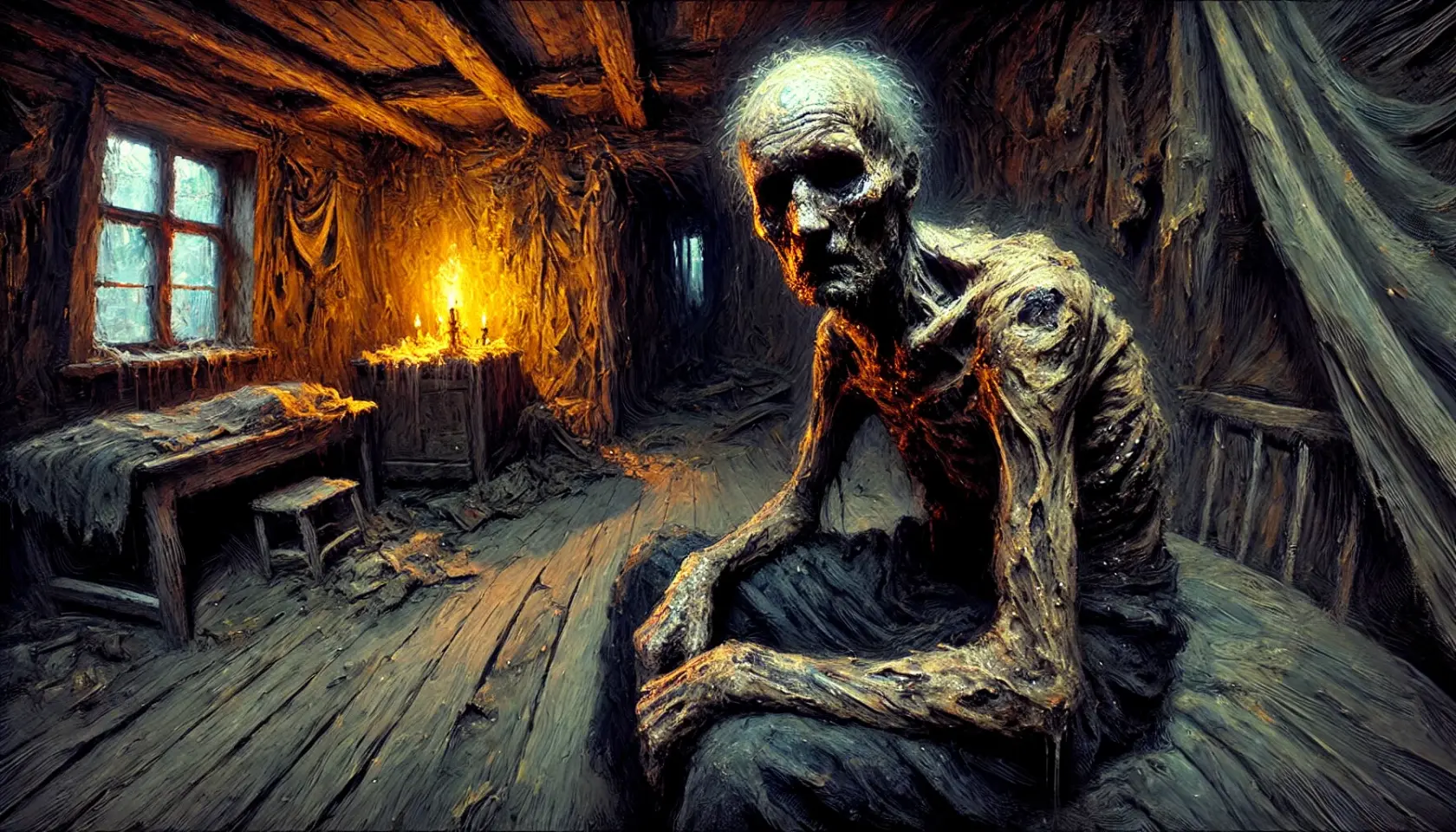
Medical accounts from Faulmoor repeatedly describe fatigue, fever, extreme thirst, darkening veins, pallor, bruising, skin damage, yellowed or weeping eyes, and foul discharge. Advanced cases may develop severe lesions around the spine and joints alongside rapid physical decline.
Doctor Kyra Sheer's surviving field notes remain among the most widely circulated descriptions of the condition. Her observations are valuable, but her explanations are not treated as settled fact. Like every other physician working during the Blight, she has been forced to draw conclusions from incomplete cases, unreliable travel histories, and patients who often die before long-term study is possible.
The speed and severity of visible deterioration are not described consistently in every account. Some victims decline quickly, while others survive longer than expected. For this reason, outward appearance alone is not considered a reliable measure of either danger or prognosis.
Exposure and Quarantine
There is no single accepted public model for how the Blight spreads.
Bites, open wounds, contact with afflicted bodies, contaminated water, and prolonged exposure to heavily corrupted places are all widely feared. Some physicians also suspect routes that are harder to observe directly. Kyra Sheer's notes record cases with no obvious contact history and helped popularize theories involving mist, airborne exposure, or people carrying the Blight before visible symptoms appear. None of those explanations has been proven well enough to end the argument.
This uncertainty drove the rapid expansion of quarantine policy. Roads were closed, settlements walled off, travelers inspected, suspected victims confined, and contaminated property burned. Such measures may reduce movement through dangerous areas, but they have also trapped healthy people beside the afflicted and created conditions in which hunger, panic, violence, and neglect can become as deadly as the Blight itself.
Fear of exposure carries its own consequences. A rumor can close a gate. A cough can break a family apart. A suspicious wound can cost a traveler shelter, employment, or their life before anyone knows whether they were ever afflicted at all.
Treatment and Medical Study
Physicians, alchemists, priests, and folk healers have attempted bloodletting, herbal treatments, distilled compounds, purification rites, silver preparations, restorative magic, and countless regional remedies. Some methods can ease pain, close wounds, reduce fever, or keep a patient alive longer. None is publicly known to reliably remove the Blight once it has taken hold.
Kyra Sheer's notes describe repeated failures, including treatments that appeared promising before symptoms returned. Her conclusions about why particular remedies fail remain medical interpretation rather than established truth.
This distinction matters. Healing an injury caused by an afflicted creature is not the same thing as proving that the Blight itself has been removed. Likewise, temporary improvement is not treated as evidence of a cure.
Research continues because the alternative is surrender. Healers compare case histories, scholars recover older texts, priests examine doctrine and ritual, and some investigators turn toward relics or the Pale in search of explanations. Publicly, none can yet claim a complete answer.
The Blighted Dead
Death does not always end the Blight.
Some bodies rise after visible life has ended. These Blighted vary enormously in condition and behavior. The most familiar are slow, damaged corpses that survivors often call Shamblers, but treating every risen body as mindless has become increasingly dangerous.
Blighted have been observed lingering near familiar places, moving without obvious purpose, attacking the living, stalking prey, using terrain, coordinating with one another, and reacting to sounds or movement. Rare forms can mimic voices, lie in wait, retain traces of martial behavior, or display physical changes unlike those of ordinary risen dead.
Several field names have entered common use for these recurring forms, including Whisperers, Broken Lords, Watchers, Drowned, Wretched, Blightbursts, Rotspitters, Spillguts, and Blasphemies. These names are survivor classifications, not proof that every Blighted creature fits neatly into a fixed taxonomy.
Changing Behavior
Accounts from the first year of the crisis often describe the risen dead as slow, repetitive, and comparatively easy to predict. Reports from the second year are more troubling.
Some Blighted now appear capable of patience, ambush, mimicry, coordinated movement, and selective pursuit. Former soldiers have reportedly retained fragments of practiced violence. Whisperers use familiar voices to draw people into danger. Other creatures seem adapted to water, ruined structures, open roads, or heavily corrupted ground.
Whether this represents learning, environmental adaptation, different stages of corruption, or several unrelated phenomena is not publicly known. What is clear is that old survival advice built around the assumption of mindless undead is no longer dependable.
Silver and Containment
Silver is the only material widely known to permanently disrupt fully turned Blighted creatures. That fact has transformed it from ordinary wealth into a strategic resource. Coins and household objects are melted down, smiths are guarded, mines influence regional politics, and a person carrying usable silver may be both safer and considerably more worth robbing.
Fire is strongly associated with corpse disposal and large-scale containment. Bodies, buildings, fields, and even settlements have been burned when authorities believed recovery was impossible or the risk of leaving them intact was too great.
Neither silver nor fire is considered a cure. Silver is used against the Blighted dead; fire is used to destroy bodies and contaminated material that people fear cannot be made safe.
Exact tabletop rules for exposure, infection progression, silver, and related effects are maintained separately on the live In-Game Mechanics page.
Competing Explanations
The lack of a proven cause has produced several overlapping schools of belief.
Physicians tend to describe the Blight through exposure, symptoms, contaminated environments, and patterns of apparent transmission. Their language often resembles that used for disease even when their observations do not fit ordinary illness cleanly.
Priests interpret the catastrophe through theology. Depending on faith and region, the Blight may be described as punishment, corruption, divine silence, a test, or evidence that familiar protections have failed.
Followers and scholars of the Old Ways are more likely to connect the crisis to forgotten forces, ancient sites, relics, or knowledge predating the present religious order. Such claims range from serious scholarship to superstition and fraud.
Ordinary survivors often combine all three approaches. A person may visit a physician, carry a silver charm, avoid a cursed-looking stream, and pray at a roadside shrine without seeing any contradiction between them.
Present Day
By the second year of the Blight, the crisis has become embedded in the structure of Norvostran life. It determines which roads remain open, who may cross a gate, where soldiers are stationed, how medicine is rationed, what goods become valuable, and which communities are abandoned or defended.
It has also widened existing divisions. Wealth buys cleaner water, better shelter, guarded travel, private healers, and distance from suspected exposure. The poor are more likely to live beside contaminated ground, work dangerous routes, share crowded housing, or be trapped inside quarantine zones they had no role in creating.
The result is a world in which people must make decisions with incomplete information and terrible consequences. The Blight kills, but so do panic, scarcity, opportunism, and policies designed by people who cannot know whether they are preventing the next catastrophe or creating it.