
Greymire
The Smuggler’s Haven
“In Greymire, you can buy
anything—anything: stolen grain, a name thatain’ain't yours, a dagger meant for afriend’friend's back.”Gold
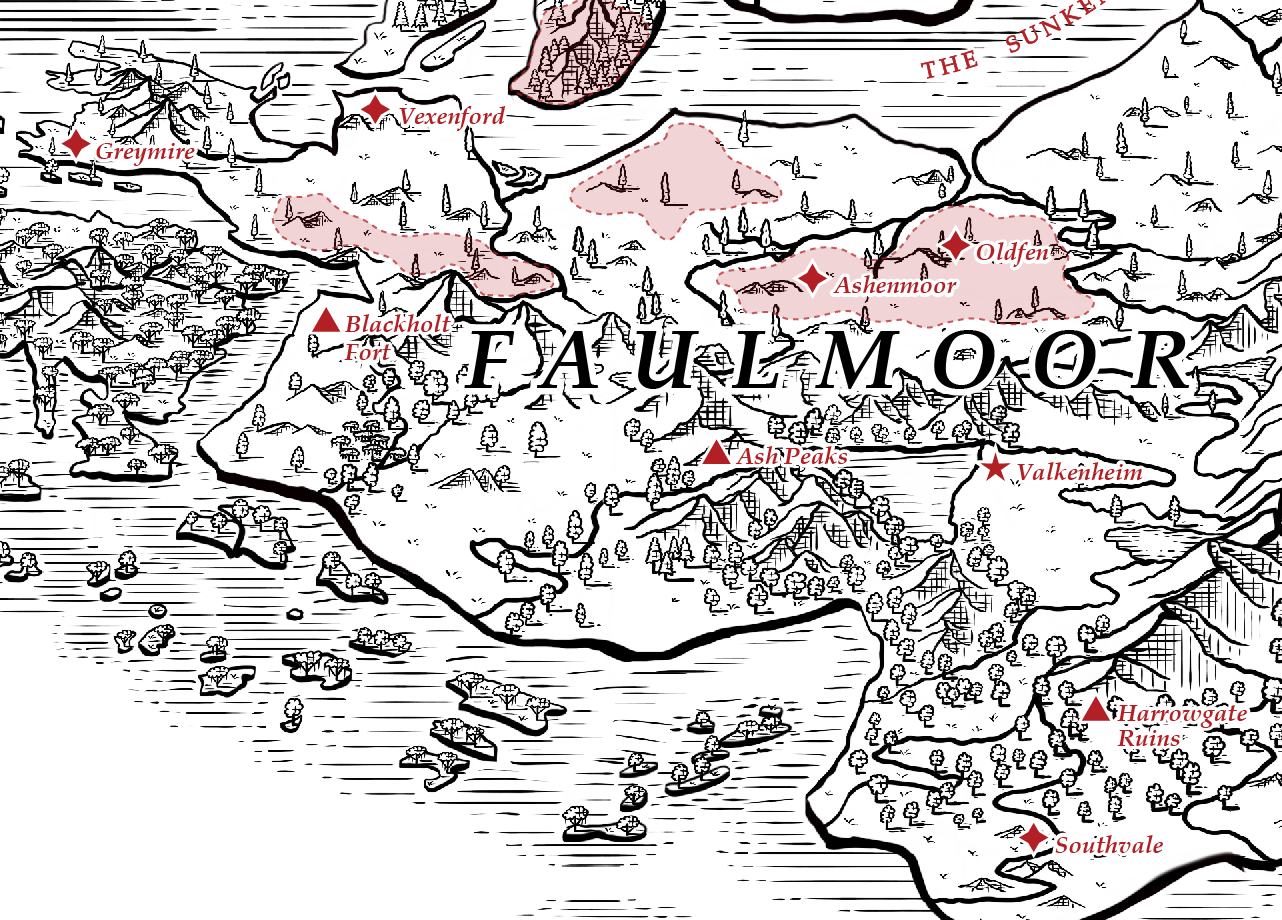
Greymire is a coastal city in Faulmoor and one of the region's most active surviving ports. It remains formally subject to House Valkenmar, but the barony's military and administrative resources are too thin to closely police every dock, neighborhood, hidden landing, and informal trade network.
Fishing, legitimate commerce, smuggling, refugee transport, and illicit trade therefore exist beside one another. Greymire is not politically independent or truly lawless. It survives in the space between formal authority and limited enforcement.

Overview
Greymire is wet, crowded, and densely built. Salt-stained warehouses, leaning timber buildings, cracked cobbles, working quays, patched roofs, improvised barricades, and hastily repaired vessels give the city a visibly worn character. Salt, fish, mold, smoke, wet rope, cooking food, and harbor water mingle from street to street.
The city remains busy because goods, people, information, and contraband still need somewhere to move when official routes fail. Fish are unloaded at dawn, freight changes hands, butships silver?are Silver’srepaired, worthcontracts moreare thannegotiated, life.rooms Youare don’trented, spendand itmarket here,stalls youcontinue guardto it,serve ‘causeordinary households alongside smugglers and refugees.
Bright scraps of cloth, knotted cord, painted marks, and similar signs are used in parts of the momentcity someoneas seeswarnings, silverroute inmarkers, yourbusiness purse,signals, they’llor gutcoded youcommunication. justTheir tomeaning meltdepends itheavily downon forneighborhood aand blade.audience.
History
Before the Rotmire Blight cast its shadow over Faulmoor, Greymire was a bustlingprosperous shipping city supported by fishing, warehousing, maritime trade, and the traffic of travelers and goods through Faulmoor.
The Blight disrupted roads, emptied settlements from established trade routes, and made movement between communities increasingly dangerous. Greymire's economy changed rather than collapsed. Unofficial networks expanded into the gaps left by failing institutions, and activities once regarded as straightforward smuggling became entwined with the movement of food, medicine, people, silver, and information.
Containment failures during the early Blight permanently reshaped how people enter and leave the city.
One of the city's deepest scars is Charrow, a cluster of wards deliberately burned during the early crisis without meaningful evacuation. Greymire later rebuilt around the ruined district rather than removing it.
Present Day
House Valkenmar remains Greymire's lawful ruling authority. Soldiers, officials, clerks, tax collectors, and civic personnel are still present, but practical control varies sharply by district and circumstance.
That produces an uneven civic order. Official checkpoints, fines, custody, records, and public punishments exist beside private brokers, smugglers, freight interests, and neighborhood power figures. Local operators generally understand that tolerance for informal power ends when it draws sustained attention from one of Faulmoor's ruling houses.
Greymire's justice is intentionally visible. People condemned to death may be hanged from the exterior walls and left on display as warnings to those approaching the city. Who is displayed, where, and under what explanation can carry political meaning beyond the punishment itself.
Notable Locations
The Working Docks
Greymire's docks remain the center of its maritime economy. Fishing boats, merchant vessels, patched coastal towncraft, renownedferries, freight crews, warehouses, and private brokers all compete for its vibrant shipping industry and strategic maritime significance. Nestledspace along the jaggedwaterfront. coastline,Legal and illegal cargo often pass through the town'same streets and buildings.
The City Gate
Only one of Greymire's docksformer werethree aliveprincipal withgates activityremains in regular use. It is both a practical checkpoint and a reminder of the containment failures that reshaped the city during the early Blight.
Charrow
Charrow is a walled burned district inside Greymire. Once known as merchantthe vesselsCharred fromRow, distantit landscontains anchoredan toorganized tradeinhabited goods,core culture, and news. The air was filled withunder the mingling scentsinfluence of fresha seapower breezebroker andknown exoticas spices,Rook, while thedeeper streetsruins echoedremain withless the harmonious blend of diverse languages and lively commerce.
The town'district's architectureprincipal reflectedlogistical center is the Rookery, a surviving former merchant exchange used to coordinate supplies, favors, debts, and access.
The Marrow Room
The Marrow Room is a decaying brothel long associated with Greymire operator Jorick Vance. Its importance came as much from the people and business that passed through it as from its prosperity:stated well-maintainedtrade.
The linedCity Walls
Greymire's exterior walls serve both defensive and judicial purposes. Executed prisoners may remain hanging from them for extended periods, making the cobbledwalls streets, and the harbor was fortified with sturdy piers and warehouses. Local businesses thrived, from shipwrights and fishmongers to artisans crafting wares for both locals and travelers. Greymire's markets were famous for offering a plethora of goods, including fine textiles, rare spices, and handcrafted jewelry. The town was not only a hub of economic activity but also a cultural melting pot, where festivals and maritime celebrations drew visitors from across the region.
However, the onsetone of the Blightcity's broughtmost profoundvisible expressions of formal authority.
Nearby Sites
Hadran's Rest
Hadran's Rest is an island off Greymire's coast centered on a temple and devastatingtraditions changes.associated Aswith Saint Hadran. It is closely connected to the diseasecity spread,by feargeography and paranoiatravel, grippedbut is not part of Greymire itself.
Campaign Developments
Jorick Vance
Jorick Vance was later found dead and displayed among the land.bodies Tradehanging routesfrom wereGreymire's disrupted,exterior and the once-thriving docks saw a sharp decline in legitimate commerce.walls. The Baron’circumstances surrounding his death are not publicly established.
See Also
In this vacuum, opportunism flourished. The town's strategic location and intricate knowledge of hidden coves made it an ideal haven for smugglers and black-market traders. The once-respectable shipping town transformed into a lawless enclave where the exchange of contraband became the norm. Salt-stained ships began arriving under the cover of darkness, unloading illicit cargoes such as contraband silver from Fenmire, alchemical elixirs falsely promising protection from the Blight, and relics scavenged from the ruins of quarantined towns. The docks, once a symbol of legitimate trade, now served as the epicenter of clandestine operations.
The town's leadership became fragmented, with loyalties shifting between influential houses such as Wilthorne and Harrowden, and occasional feigned obedience to
Despite the chaos, a semblance of order emerged through groups like the Tideborn, a fledgling smuggling guild striving to establish dominance in the now lawless town. Greymire's transformation from a respectable shipping hub to a smuggling center exemplifies the town's resilience and adaptability in the face of adversity. It stands as a testament to how desperation and opportunism can reshape a community, turning it into a place where survival hinges on secrecy, deception, and the relentless pursuit of profit.
Detailed Overview