
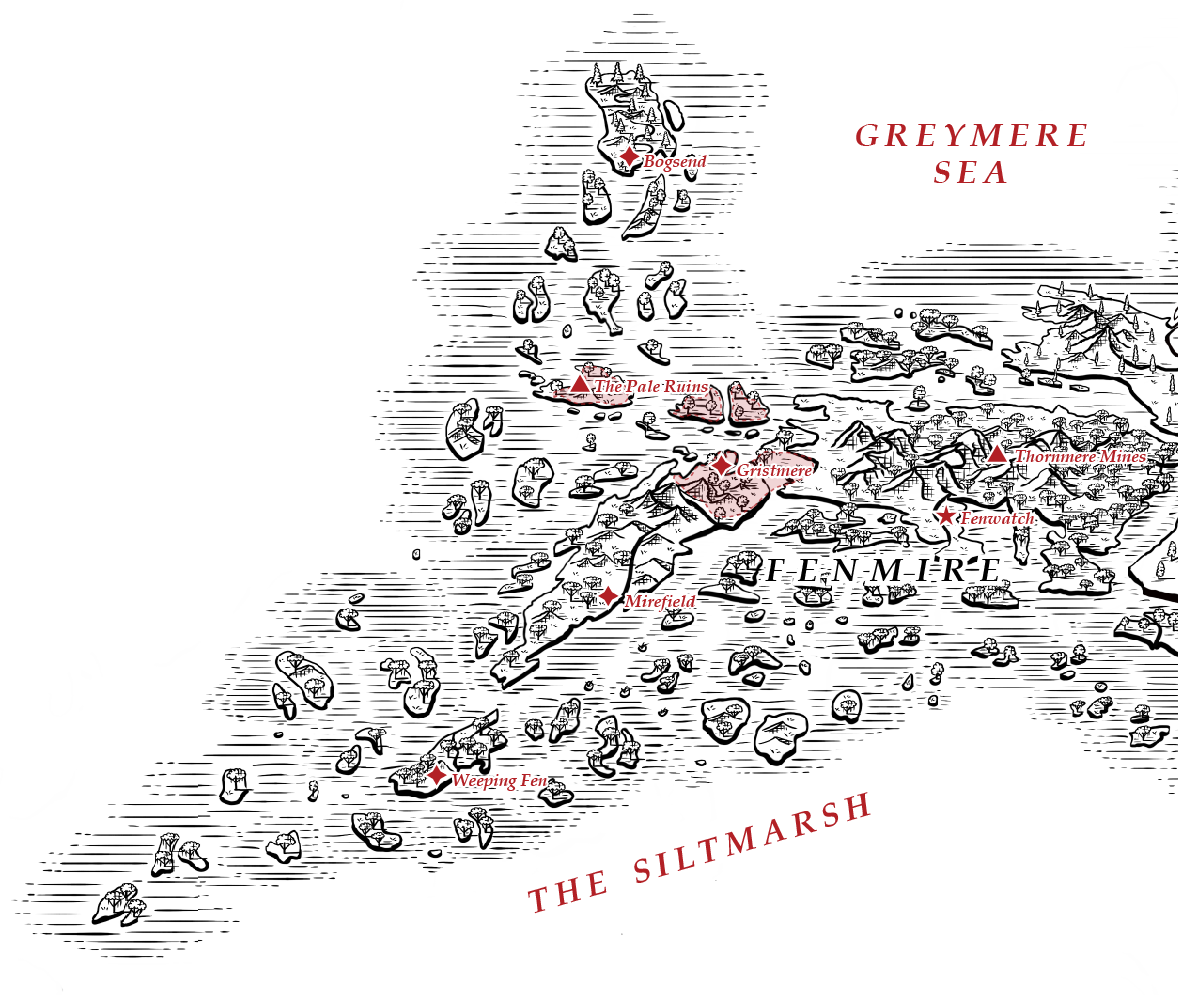
Weeping Fen
A Town Built on Bones
At“Thefirst,stone beneath Weeping Fen predates the settlement and was cut with a precision its founders did not possess. That the townspeople reused it is unremarkable. That so much of it wasjustalreadyoldtherestone—good,issolid,not.”
nothing more. We built our homes with it, walked our streets over it, never thought twice. But the deeper we dug, the stranger it became. Walls too perfect, carvings too fine, steps leading down to nothing. We weren’t just building a town—we were waking something buried beneath it. And now... I don’t think it ever went back to sleep."—
EdranVeydrithMarshlow,Serrin,fishermanLucentand early settler of Weeping FenEndura
Weeping Fen wasis thea newest and most promisingfishing settlement in Fenmire beforebuilt over and partly from much older ruins. Before the Blight,Rotmire quicklyBlight, establishing itself as the bestrich fishing hubgrounds inand allregional oftrade Faulmoor.made Theit waters surrounding the village teemed with life, offering a bounty of fish unseen in other partsone of the region.marsh's Withfastest-growing accesscommunities. toIt plentifulis foodnow silent, and steadyno trade,regular itcontact flourished,has drawingreturned settlers eager to carve out a future onfrom the edges of the fens. What began as a modest fishing village rapidly grew into a bustling town, its economy built upon the steady rhythm of nets cast into the dark waters and the smoke of curing fish rising into the sky.settlement.
Wooden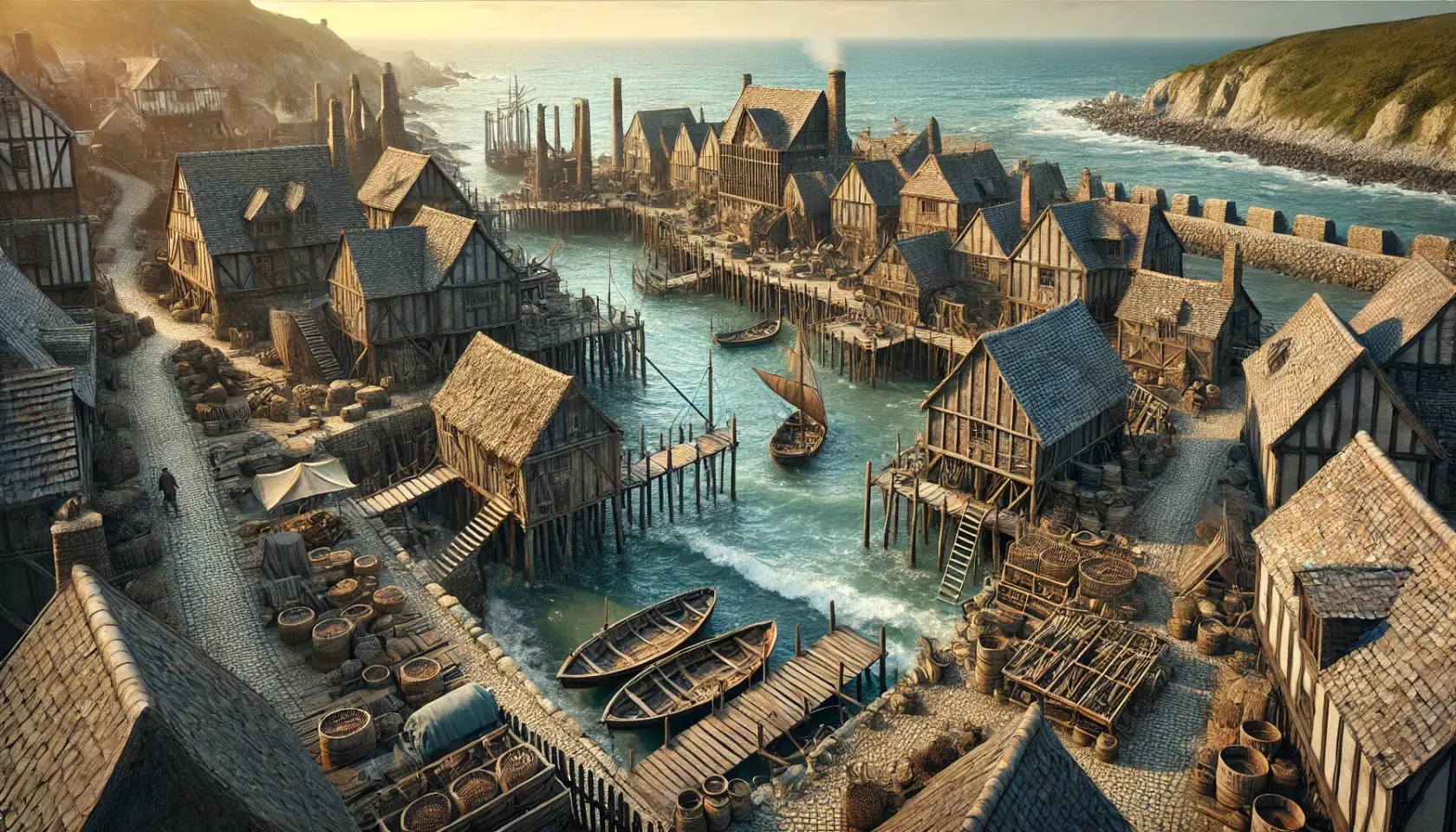
Overview
Weeping intoFen grew around docks, fishing boats, netting racks, smokehouses, markets, and the murkypreservation depths,of linedfish for trade with fishingFenwatch, boats that cameMirefield, and wentother atsettlements.
As the town expanded, builders uncovered older stone beneath it. Pieces were reused in foundations, walls, paths, and smokehouses. Further excavation revealed smooth masonry, precise carvings, buried steps, and structures whose original purpose was builtno upon,longer workedunderstood.
The toruins preservebecame part of ordinary town life long before they became a source of fear.
History
Weeping Fen initially avoided the bountyworst effects of the water.Blight The town’s market square smelledbecause of brine and smoked fish, with traders from Fenwatch and Mirefield bartering for the finest catches. Fishmongers filled the streets, their stalls packed with fresh eel, pike, and the deep-water species unique to the region. The people of Weeping Fen lived and thrived by the water, and the town’s culture was shaped by it—songs of the sea, superstitions about the spirits that lurked beneath, and the quiet belief that the waters had always watched over them.
However, Weeping Fen was not just built upon fertile waters—it was built upon something far older. At first, the ruins beneath the village were little more than scattered stones buried in the earth, forgotten and nameless. As homes and communal buildings were raised, stones were borrowed from these ancient remains, repurposed into walls, pathways, and foundations. What was once overlooked soon became undeniable. The deeper the settlement dug, the more of the ruins they unearthed—stonework too smooth, too precise for ordinary hands to have shaped. What lay beneath Weeping Fen had been lost to time, but now, piece by piece, it was waking once more.
When the Blight came to Fenmire, Weeping Fen was spared the worst of it, its remote location and distancelimited fromroad major roads keeping the infection at bay. As Gristmere fell, and as Mirefield braced itself for the Blight, Weeping Fen became an unexpected sanctuary.access. Refugees from theother northsettlements arrived in increasing numbers, bringing stories of burning townsarrived, and risingthe dead,town's offishing barricadeseconomy tornhelped down and desperate last stands. The village, well-fed and largely untouched, took them in, swelling in size and growing stronger as displaced people added their skills tosupport the settlement’slarger prosperity.population.
Yet,Over as the Blight persisted, the people of Weeping Fen noticed a terrible change—one that began intime, the waters themselves.changed. Fish,Fish oncebecame less plentiful, grewand scarce.some The ones that were caughtcatches showed signs of sickness—pale flesh, blackeneddarkened eyes, unnaturalunusual growthsgrowths, alongor theirother spines. Nets hauled up horrorssigns that shouldresidents notassociated have existed, twisted creatures that should have never been. What was once a thriving fishing town saw its livelihood dwindle, its lifeblood poisoned bywith the sameBlight.
Fishing thatdeclined, swallowedand residents increasingly relied on hunting, foraging, scavenging, and trade with Mirefield.
Then the land. Fishermen became hunters, foragers, and scavengers, looking for other means to sustain themselves. Some adapted, but others whispered of something stirring beneath the waters—something that was changing, waiting.
For a time, Weeping Fen stood as a symbol of resilience. Mirefield, ever loyal to House Harrowden, established regular supply runs, sending weapons, tools, and cloth in exchange for shipments of fresh fish and preserved food. It was an arrangement that kept both settlements stable. Then, without warning, the deliveriestraffic stopped.
Present Day
The last known supply shipmentmission from Mirefield wasdid sentnot south,return. butLater thescouts ferrymenalso never returned. Scouts dispatchedfailed to investigate have not come back.back, Noand messengersno haveregular messenger or trading vessel has emerged from theWeeping village.Fen.
The watersdocks surroundingare Weepingreported Fen remain calm, but no boats arrive from its once-busy docks. The smokehouses no longer burn,silent and the scentsmokehouses ofdark.
Among those few who still watchwatching the southern waters, astories nameincreasingly hasrepeat begun to spread—the name ofthe Last God. Whether this describes a person, a cult, a title, or something unknown,else somethingis unseen.
Thepublicly Last God.known.
Detailed Overview
Notable Features
Locations
The Great Smokehouse
The Great Smokehouse was the town's largest fish fish-curing facility),facility and a major part of its trade economy.
The Tide Market
The hubTide forMarket fishserved fishers, traders, and goods),visiting merchants while the settlement remained active.
The Ruined Steps
The excavatedRuined remnantsSteps are part of anthe ancientolder structurestonework uncovered beneath the town),town. TheTheir Fisherman'soriginal Rest (popular inn for merchantsdestination and travelers),purpose remain uncertain.
The Drowned Altar
The recentlyDrowned uncovered,Altar mysteriousis ruinanother tiedexposed topart of the buried ruins and has become the subject of local superstitions)
See StatusAlso