
Vexenford
“I came here hoping for safety, but all I found was more death.”
— an unnamed refugee
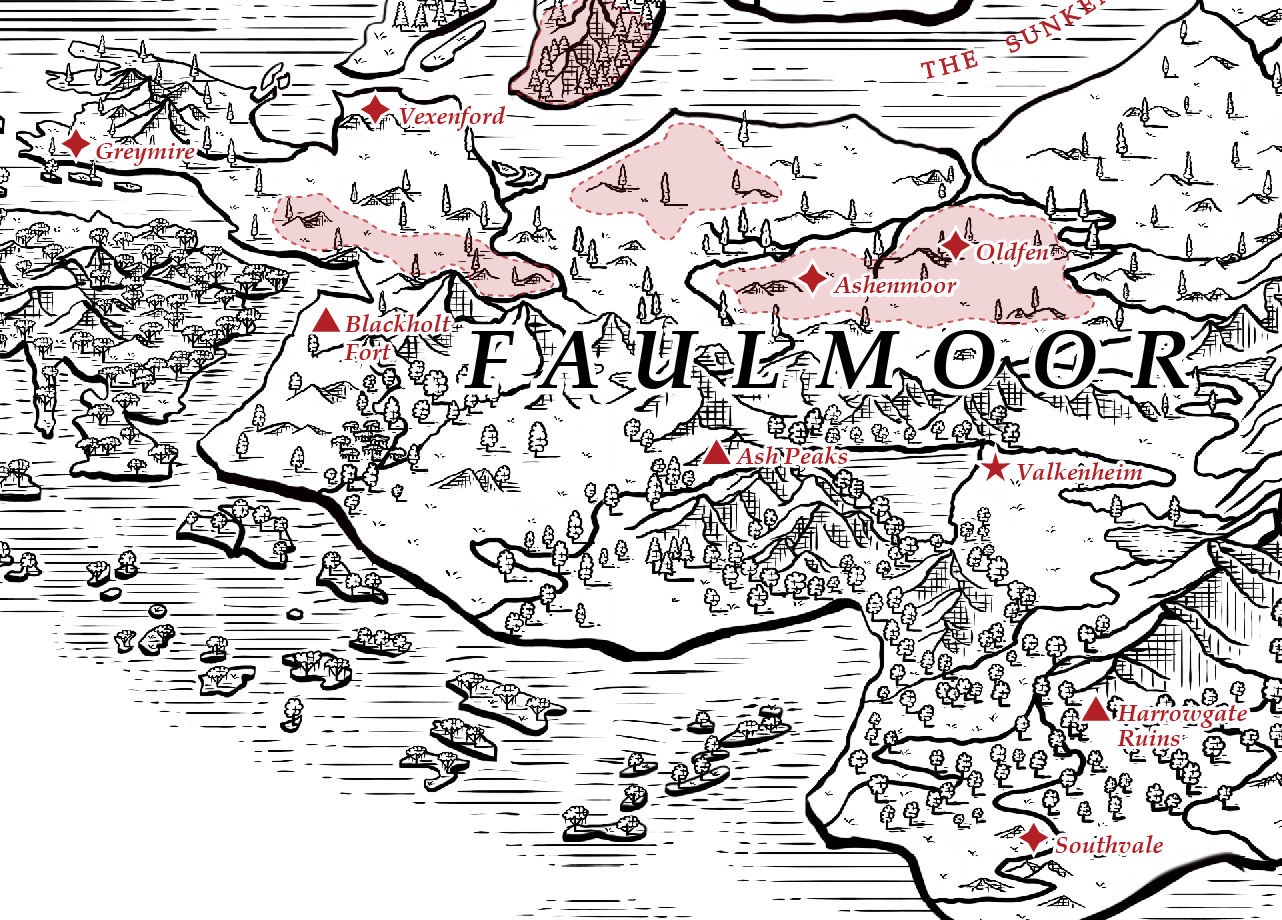
Vexenford is a massive fortified harbor-city in Faulmoor controlling the mainland approach to Ebonmoor. Governed under House Valkenmar, it is both an active trade center and one of the barony's most important checkpoints during the Rotmire Blight.
Overview
Stone walls, scarred ramparts, watchtowers, docks, and fortified bridgeworks dominate Vexenford. Merchant vessels, fishing craft, freight traffic, and armed house ships still use the harbor, keeping the city economically important despite strict control over movement.
The city's class divide can be read vertically. Wealth lives in cleaner air above the street, while labor, runoff, crowding, checkpoints, and much of the cost of keeping the city alive collect below.
Vexenford's defining modern feature is vertical. During the Blight, wealthy residents began building bridges and platforms above the crowded original streets. Those structures expanded into stairs, alleys, shops, homes, and whole elevated blocks, creating a second city above the first.
The upper level is cleaner, drier, brighter, and better maintained, with treated timber, stonework, painted facades, wrought iron, glass, better food, and private towers. Below, the original streets sit beneath beams, awnings, and the undersides of newer construction. Ash, runoff, refuse, and reduced sunlight make the city's class divide physically unavoidable.
History
Before the Blight, Vexenford was already a major harbor and trade center positioned where traffic from mainland Faulmoor could move toward Ebonmoor.
As quarantine and restricted movement became central to regional survival, the crossing grew even more important. Fortifications, inspections, and military control expanded while displaced wealth reshaped the city upward. What began as elevated bridges and private platforms became a permanent upper district.
Present Day
Vexenford remains busy because it still connects people and goods that cannot easily travel elsewhere. The same importance makes it heavily policed.
Travelers approaching Ebonmoor are inspected, cargo is scrutinized, and suspected exposure can result in confinement or refusal of passage. Refugees and displaced people gather around a system built to keep movement selective, while forged papers, bribery, and smuggling remain persistent responses to those restrictions.
The upper and lower city now function almost as different social worlds, although each depends on the labor, trade, infrastructure, and movement of the other.
Notable Locations
The Iron Gate
The Iron Gate controls the principal lawful crossing toward Ebonmoor, where the route meets Rimewatch Keep on the island side. Soldiers inspect travelers, papers, cargo, and visible signs of possible Blight exposure before allowing passage.
The Blackflow Docks
The Blackflow Docks remain active under military scrutiny and are central to Vexenford's continuing trade. Approved cargo, fishing traffic, house vessels, and less lawful business all compete around the same waterfront.
The Rot Ward
The Rot Ward is a walled quarantine district used to confine people suspected of Blight exposure. Its reputation is grim, and stories of wrongful confinement, abuse, and people disappearing behind its barricades circulate widely. Officials describe the ward as a containment necessity.
The Upper City
The elevated districts contain wealthier homes, shops, private towers, covered walks, and bridges built above the older street plan. Construction ranges from elegant stone-and-timber residences to precarious additions suspended over lower streets.
The Lower City
The original city remains crowded beneath the newer construction. It receives less light, more runoff, and much of the physical burden created by life above. Markets, workshops, lodging, labor, and ordinary street commerce continue there despite harsher conditions.
Blackflow Market
Blackflow Market remains a major commercial district. Legitimate trade mixes with medicine, stolen goods, forged papers, contraband, and other transactions that thrive under restrictive movement laws.
The Hollow Crown
The Hollow Crown is a worn tavern on the city's outskirts frequented by mercenaries, travelers, refugees, smugglers, and people looking for work or passage. Its reputation rests more on connections than comfort.
Gallows Square
Gallows Square is used for public punishment and execution. Bodies may remain on display as warnings, making the square one of the clearest expressions of House Valkenmar's visible enforcement in the city.