
Fenmire Overview
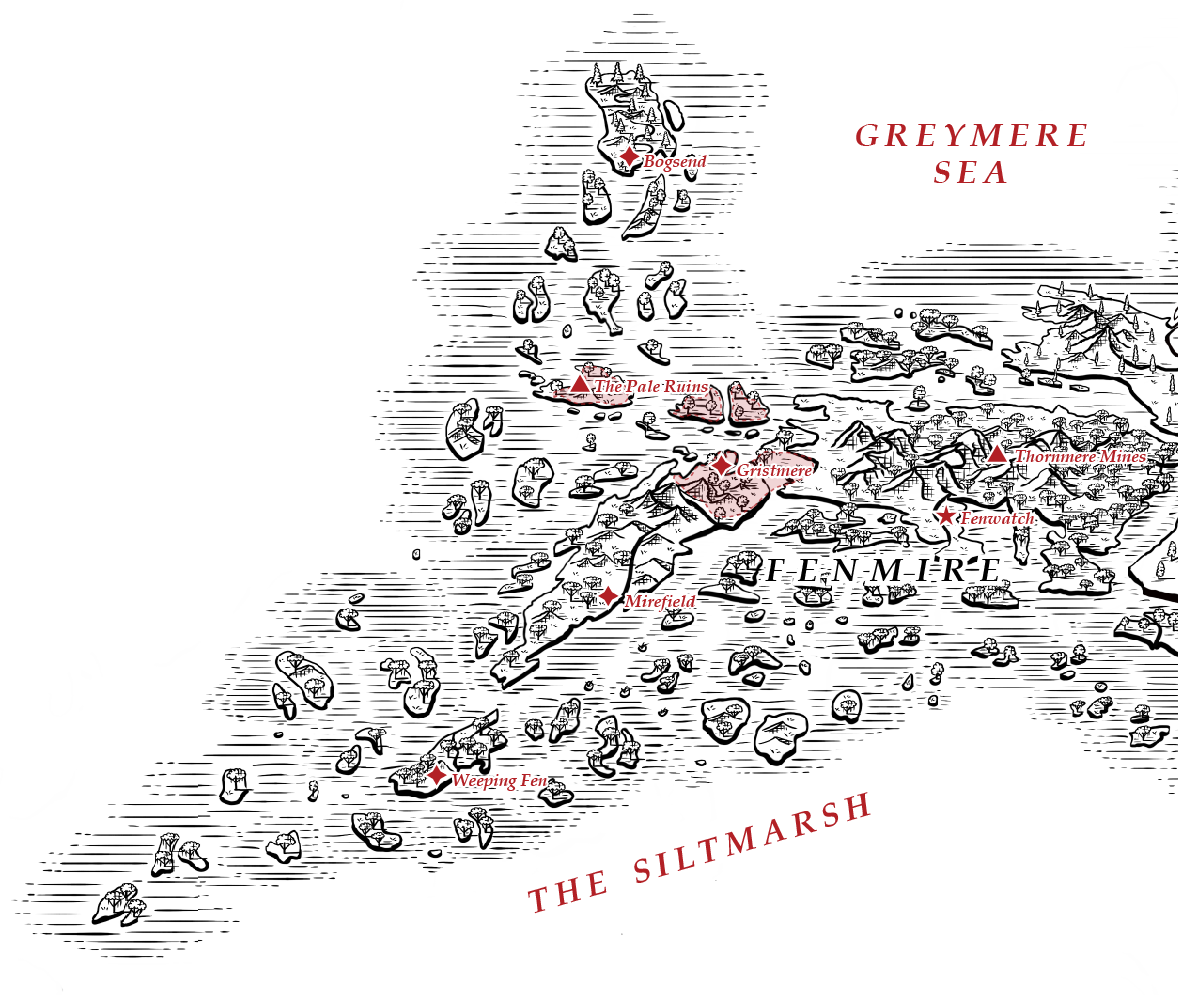
Fenmire,is thea most forsakenmarsh region of Faulmoor, isruled, awhere vastit expansecan ofbe deepruled at all, by House Harrowden. Deep bogs, brackish fens, and mist-choked waterways stretching toward the Greymere Sea. The land is half-drowned, characterized bychannels, sinking peat, twistedraised mangroves,settlements, ferries, and decayingpole-boats reeds,define makinga travellandscape treacherous.where Villages,water whenhas theyalways canmattered bemore builtthan atroads. all,The arediscovery precariouslyof perchedmajor atopsilver deposits transformed Fenmire from a neglected backwater into one of the barony's most strategically important regions.
Overview
Permanent construction in Fenmire is difficult. Settlements cluster on firmer ground, raised wooden platforms, stilts, orsalvaged half-sunkenstone, ruinsand fromolder agesfoundations. past,Travel adepends patchworkheavily on local knowledge of resiliencewaterways, againstislands, achanging landchannels, and safe ground.
Fishing, trapping, foraging, ferry traffic, and small-scale trade support much of ordinary life. Conventional farming is difficult, and the region's isolation has encouraged communities that doesare notpractical, welcomesuspicious habitation.of outside authority, and accustomed to solving problems locally.
The airThornmere issilver thickdeposits withaltered humidity,Fenmire's heavyplace withwithin Faulmoor. Silver was valuable before the stenchRotmire Blight and became essential afterward, giving House Harrowden political leverage that geography alone had never provided.
History
House Harrowden historically exercised uneven authority across scattered marsh communities through bargains, local arrangements, and control of dampthe rot,few stagnantroutes water,that could be reliably taxed or defended.
The discovery of silver at Thornmere strengthened the house dramatically. What had once been peripheral territory became economically indispensable.
During the Blight, House Harrowden pursued isolation. Bridges and theland faintroutes sourwere tangdestroyed ofor decay.abandoned, Evenpushing atmore midday,movement low,onto curlingcontrolled mists slither through the treeswaterways and riseferries. fromThis theprotected bogs,some obscuringinterior visionsettlements andwhile mufflingleaving sound.others Atcut night,off paleor green wisps—known as swamp lanterns—flicker through the gloom, playing tricks on the eyes and luring the unwary deeper into the marsh. The land is old—far older than the noble houses and their tenuous claims. Half-buried stonework and shattered obelisks rise from the muck, the remnants of a civilization lost to time. Fenwatch, the only semblance of a seat of power, was built upon what was once a mere trading post, growing as necessity demanded rather than through any true design. Its structures, reinforced with salvaged stone and water-resistant timber, stand as the closest thing to permanence in a place where the ground itself shifts beneath one’s feet.exposed.
Yet even here, the Blight and isolation take their toll. With theThe fall of Gristmere, damaged older transport and trade routes further, increasing the arteriesimportance of ferries, local boats, and settlements able to maintain dependable landing points.
Present Day
Fenmire remains difficult to enter and difficult to govern. Water routes are essential, overland travel is unreliable, and many settlements depend upon local ferries or small craft.
Silver remains the region's greatest source of influence. Rumors that oncethe connectedThornmere veins are failing circulate widely, while others insist scarcity is being exaggerated to preserve Harrowden leverage. Whatever the settlementstruth, of Fenmireaccess to silver is tightly controlled and politically charged.
The Blight has made fishing, scavenging, and movement through the outsidemarsh worldmore dangerous. Some communities have all but collapsed. Mirefield, ever loyal to House Harrowden, has turned inward, fortifyingwhile itsothers wallssurvive through smuggling, barter, and blockingarrangements that would have been illegal or unnecessary before the oldcrisis.
Notable inLocations
Fenwatch
Fenwatch is the principal seat of House Harrowden and the closest thing Fenmire has to a desperateconventional attemptpolitical tocenter.
Mirefield
Mirefield is a fortified settlement associated with Harrowden authority and defensive efforts against the horrorsworsening conditions of the marsh.
Thornmere Mines
The Thornmere Mines are Fenmire's most strategically important economic site and one of Faulmoor's crucial remaining sources of silver.
Bogsend
Bogsend occupies unusually dependable ground within the marsh atand bay.has Thosebecome whoa oncerefuge reliedfor onpeople roadsseeking now cling to precarious ferries, hoppingdistance from islandfailing tosettlements islandand innoble anauthority.
Gristmere
Gristmere's keepfall helped sever older transport and trade routes open.through ItFenmire, is a system that works for now, butaccelerating the watersregion's areisolation.
Weeping Fen’s silence has only deepened the growing sense of dread.Fen
The marshfolk endure because they must. They are an insular people, pragmatic to the point of cruelty, for in Fenmire, generosity is often the death of both the giver and receiver. They travel not by roads, for there are none, but by pole-boats and rafts, navigating the dark, reed-choked waterways where the land itself conspires against them. Food is hard-won. The soil is too poor for farming, forcing them to survive on fishing, foraging, and trapping. Yet even this has become dangerous. The waters, once teeming with life, now churn with things better left undisturbed. The fish, once the lifeblood of Weeping Fen, have grown sick, twisted by the same affliction that now grips the land. Thornmere Mines, the only true source of wealth in Fenmire, still bleed silver, but at great cost. Rumors persist that the mines have been exhausted, yet House Harrowden tightens its grip, unwilling to relinquish control of what little remains. The mines are heavily guarded, not just against would-be thieves, but against the growing number of desperate souls who would risk anything for a glimmer of silver, a chance at escape.
Some seek refuge elsewhere. Bogsend, despite its name, has become one of the last safe havens, a rare place of solid ground where deserters and survivors alike have banded together to outlast the coming collapse. They call themselves free men, but they operate under the grim belief that when the world finally crumbles, they will be the only ones left standing. They are self-sufficient, yet not above taking what they need from others. Smuggling has become their currency, their lifeline. They look upon the rest of Fenmire as doomed.
Doomed or not, the land still holds its secrets. Weeping Fen wasgrew builtaround onrich oldfishing bones,grounds itsand peoplemuch unknowinglyolder raisingburied homesstonework. atopIt somethingis longnow buried.silent, Thewith deepersupply theyboats dug,and thescouts more they uncovered—walls too smooth, steps leading nowhere, carvings too precisefailing to bereturn.
The LastBlasted God.Hearth
The Blasted Hearth is a partially submerged ruin on an isolated island, historically called the Pale Ruins stand in eeriesome contrastolder toaccounts. theIt restremains ofassociated Fenmire.with Thoughpilgrimage, partially submerged, they remain intact, untouched by time in a way that defies explanation. Before the Blight, pilgrimsrelic-seeking, and mysticsunsettling traveledreports there, swearing they could hear the voices of the gods in the wind. Now,from those who goapproach searching for relics return changed—if they return at all. And beneath the mire, beneath the ruins, something stirs.it.
See Also
Fenmire is lawless. The noble house that claims it cannot rule it,Silver and theits marshfolkImportance
Fenmire is dying. But it does not die quickly.