
The Gloom
The First to FallGloom
This so-called Blightisjusttheanothercommonhardship,modernnonamedifferent from famine, war, orfor thethousandruinedothercitymisfortuneshistoricallythatcalledhaveVelmere,comeonceand gone. Gloommire was meant to be the beating heartone of Ebonmoor’'sfuture,great trade centers. The city was deliberately sacrificed during thebridge—literallyearlyand figuratively—that would cement our place inFaulmoor’s prosperity. You don’t halt a projectspread ofthis magnitude over a handful of sick workers. Trade doesn’t stop, commerce doesn’t stop, and neither will we. The kingdom demands progress, and progress does not yield to fear.—Master Architect Halvar Roen, Lead Overseer(last recorded statement before the quarantine was enacted)
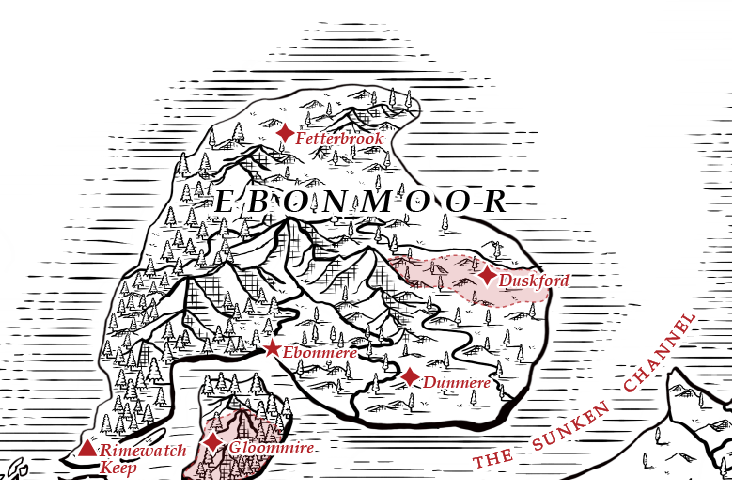
Gloommire was once a city on the cusp of transformation, a rising star within Ebonmoor that promised to cement the region’s importance in Faulmoor’s future. Positioned on a smaller island just off the mainland, it had long served as a center for timber harvesting and trade, but it was the ambitious infrastructure projects connecting it to both Ebonmoor and Faulmoor that were set to define its legacy. Grand stone bridges, reinforced causeways, and expanding roads were meant to turn Gloommire into a major hub, a gateway between Faulmoor and the outer isles. Workers from across the kingdom—builders, masons, sailors, and merchants—flocked to the city, drawn by the promise of steady work and wealth.
Then came the Rotmire Blight.: its ports were burned, its bridges were severed, and its population was abandoned in an attempt to stop the catastrophe from spreading farther.
AtSmoke still rises from the time,ruins noyears one truly understood what they were dealing with. Whispers of sickness had spread across Norvostra, but it was always somewhere else—a distant problem, a plague of the desperate and the poor, a misfortune for those who lacked the means to protect themselves. Gloommire, bustling with workers, trade, and noble investment, felt untouchable.later.
The first cases were dismissed as exhaustion, a natural result of the brutal labor required for the massive infrastructure projects. The workforce had swollen to unprecedented numbers, bringing laborers from across Norvostra—builders, masons, sailors, and merchants who came for opportunity and prosperity. Men collapsing at their posts was not uncommon. Fevers spread in the crowded barracks, and coughs echoed through the timber yards, but no one thought much of it at first. It was the damp air, the hard work, the demands of an expanding city.
Then, they started not getting back up.
The first confirmed outbreak began in the lower districts near the harbors, where the laborers’ quarters stood packed against the waterfront. When the fever took hold, it did not let go. The sick lingered in agonizing delirium, eyes glassy, their breathing heavy and unnatural. Then came the violent convulsions, the blackened veins, the hollow moans that echoed long after their final breath. The first deaths were swift but not unexpected. Sickness, after all, was no stranger to labor camps. It was the return of the dead that shattered any illusions of normalcy.
When the first of the infected rose, clawing their way out of their deathbeds with stiff, unnatural movements, panic ripped through the city like wildfire. At first, many refused to believe what they saw—men they had worked alongside only a day prior moving with jerking, unnatural steps, attacking friends and kin without reason, without recognition. Some of the dead stood motionless for hours, swaying as if listening to something unheard, while others turned immediately, tearing into the flesh of the living before anyone had time to react.
The city’s leadership was unprepared. The local guards, many of whom were laborers themselves, tried to restore order, but how does one fight against something that should not be? Some tried to contain the infected, locking them in buildings, only to hear them scratching at the doors, wailing in the dark. Others attempted to burn the bodies, but by then, the disease had already taken hold across the city.
The noble overseers in charge of the bridge projects sent word to Ebonmere and Faulmoor, begging for assistance, but help never came. The decision had already been made—Gloommire would not be saved.
Overview
Velmere's importance came from trade and from the bridges and causeways that connected its commercial network. Large construction projects were underway when the Blight reached the city, drawing laborers, merchants, sailors, and materials into crowded districts near the harbor.
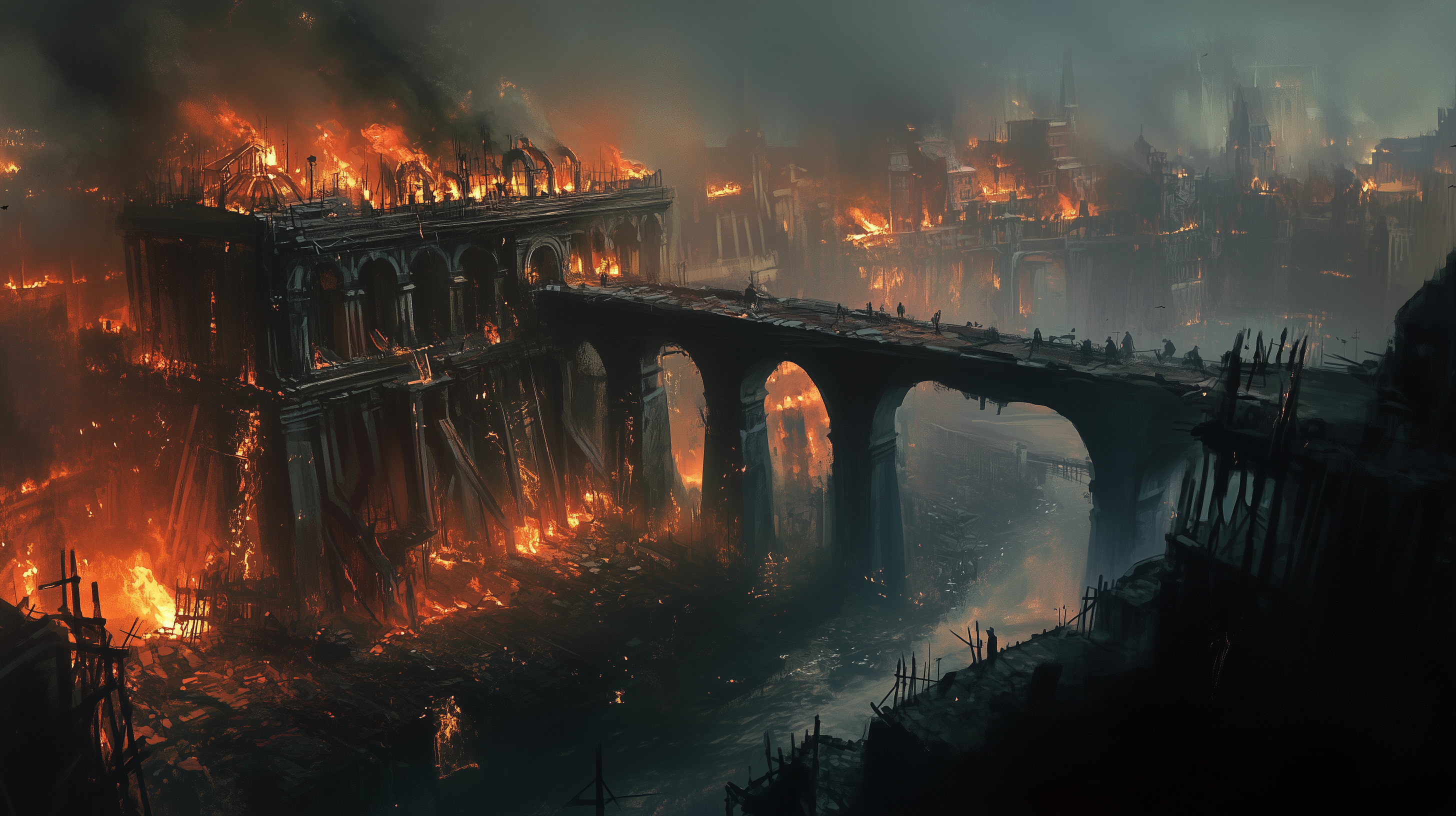
The ruins retain the shape of that unfinished expansion. Broken bridgeworks, burned docks, abandoned construction sites, storehouses, timber yards, and damaged streets remain cut off from the routes they were built to serve.
The persistent smoke gave the ruins their current name. From elevated parts of EbonmereVexenford’s, the dark column over the Gloom remains visible across the water.
History
The first outbreak spread through crowded waterfront and labor districts while the scale of the Blight was still poorly understood.
Once the danger became undeniable, the response was immediatedeliberate. House Wilthorne and merciless.the Baronial authorities chose containment over evacuation. Ships and ports were burned, bridges linking the city to surrounding routes were destroyed, and outside assistance was withdrawn.
The measures helped isolate the outbreak, but they also trapped the people who remained.
Velmere did not simply collapse. It was sacrificed.
Present Day
No serious effort has reclaimed the city. The broken approaches and continuing presence of Blighted make ordinary travel into the ruins extremely dangerous.
Stockpiled materials, tools, abandoned goods, and unfinished infrastructure continue to attract scavengers and relic-seekers despite that danger.
The name Velmere remains the historical name of the city. The firstGloom bridge—newlyrefers completed—to what it became after its destruction.
Notable Locations
The Broken Bridges
The surviving bridge remains are the clearest evidence of the city's former role as a trade hub and of the deliberate measures used to isolate it.
The Burned Harbor
Velmere's harbor was intentionally destroyed withinduring days.containment. GreatWrecked explosionsdocks, vessels, warehouses, and fireswaterfront tookstructures itremain down,among cuttingthe offmost anydangerous chanceparts of escapethe toruin.
The secondConstruction bridge,Districts
Large sections of the city were still underbeing constructionexpanded and nearing completion to Faulmoor, was reduced to rubble soon after. Ships were burned inwhen the harbor,outbreak roadsoccurred. leading to theAbandoned work camps were abandoned, and Gloommireunfinished wasstructures declaredremain lost. The speed ofaround the containmentruined effort left behind a graveyard of resources—unfinished stone structures, abandoned supply depots, and vast stockpiles of timber, tools, and goods that had once been meant to fuel Faulmoor’s expansion.approaches.
Inside
See theAlso
And then, silence.
Days passed, and no more messages came from the city. No cries for help, no signals from stranded survivors. Just the wind carrying the distant, low groans of the dead. The fires burned out, leaving only the skeletal remains of once-thriving streets, and the only movement came from shambling figures that now called Gloommire their own.
Though cut off, Gloommire is far from lifeless. It is estimated that thousands of undead now roam the city, shambling between half-finished structures and within the skeletal remains of its fallen bridges. No full-scale expedition has been sent to reclaim the city, for it is deemed too dangerous, and those who do attempt to approach do not return. Outside the city, the surrounding forests and construction sites remain eerily silent. Timber camps and small work settlements, once filled with life, now stand in ruin, their inhabitants either long dead or trapped in the wilderness. Some whisper that there may yet be survivors—stranded workers or isolated families who fled the city before its fall—but
The
Gloommire, once destined to be the gateway between Faulmoor and Ebonmoor, is now nothing more than a graveyard of broken ambition, a testament to how swiftly progress can become ruin. The bridges may be destroyed, but the city remains, waiting in the mist, its riches still untouched, its horrors still unseen.