
Ebonmere
“Ebonmoor will rise, as it always has, on its own terms.”
— Lord Eadric Wilthorne
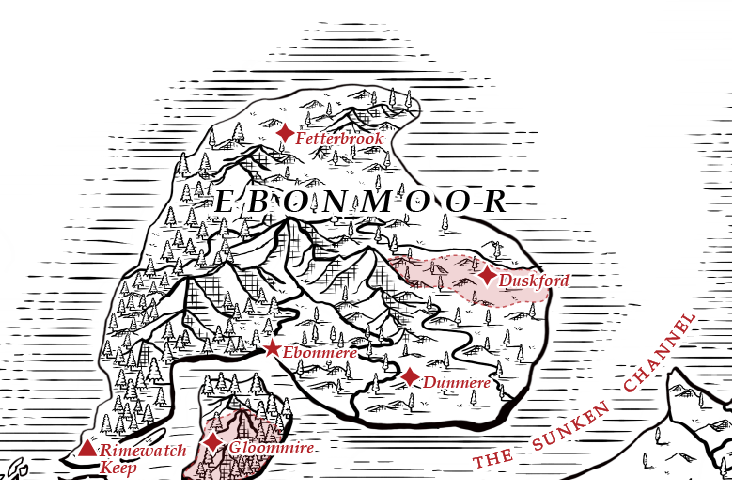
Ebonmere is the capital of Ebonmoor and the seat of House Wilthorne. Built around towering sea-facing cliffs and a major harbor, the city combines old chambers cut directly into the rock with later districts of stone and timber that spread outward above the coast.
Overview
The oldest parts of Ebonmere are carved into the cliffs. Their builders and original purpose are no longer clearly remembered, but many of the surviving halls remain in use as civic, noble, and religious spaces.
Its harbor still works, which means the city still wakes to cargo, repairs, bargaining, and departures even while every movement of people or goods carries greater political weight than it once did.
Below and around those older structures, Ebonmere developed into a maritime city of docks, shipyards, warehouses, markets, and merchants. Sheltered approaches and generations of seafaring expertise made its harbor one of the most important points of trade in Faulmoor.
The city has remained more functional than many settlements affected by the Rotmire Blight. Ships still arrive and depart, goods still move through the harbor, and skilled sailors and shipwrights remain central to local life.
History
“Ebonmere was not simply built upon older foundations. Portions of the city occupy chambers whose corridors continue behind later walls and whose stairs descend below the present waterline. Whatever stood here first was considerably larger than what survives.”
— from the Ebonmere surveys of Veydrith Serrin, Lucent Endura
Ebonmere's cliffside halls are older than the present political order of Faulmoor. Later generations expanded the settlement outward and turned its natural harbor into the commercial center of Ebonmoor.
Trade tied Ebonmere closely to the mainland and helped support the long alliance between House Wilthorne and House Valkenmar. Those same connections became sources of tension once quarantine, scarcity, and control of movement became matters of survival.
Present Day
Ebonmere remains a working port, but the Blight has changed what moves through it and who is allowed to travel.
Smuggling has expanded alongside legitimate commerce. Refugees, relics, silver, restricted goods, and private passage all command high prices, and accusations of noble protection or participation are common. The true extent of House Wilthorne's direct involvement is not publicly settled.
Political distance from the mainland has also become more visible. Some residents argue that Ebonmoor's survival depends on stricter isolation, while others remain tied economically or politically to Faulmoor.
Notable Locations
The Tidecourt
The Tidecourt is the seat of House Wilthorne, occupying a network of old chambers carved into the cliffs. It remains the principal center of noble government in Ebonmere.
The Gilded Tide
The Gilded Tide is a waterfront tavern associated with sailors, traders, and the city's less official commerce. Its reputation is closely tied to smuggling and discreet passage.
The Saltspire
The Saltspire is a prominent merchant hall overlooking the harbor. It serves established commercial interests while carrying a reputation for transactions involving rare and restricted goods.
The Widow's Walk
The Widow's Walk is a cliffside temple and crypt associated with mourning those lost at sea. Driftwood offerings and memorial rites remain part of its local tradition.