
Duskford
The Stolen Harvest
Ships“Thatcome and go, always have. But that one… that oneship just sat there. No sails, no lanterns, no crew I could see.Days passed, and it didn’t move, didn’t drift, just sat watchin’.Then folk startedgettin’getting sick.”
Fast. Too fast. And when the dead got up, that ship was gone, slipped into the mist like it was never there. But I saw it. I know what I saw.— Renholt Grayne, former fisherman of Duskford
OnceDuskford theis beatinga heartruined of agricultural settlement in Ebonmoor’s agriculture,whose Duskfordsudden stoodfall asdestroyed a pillar of stability, its rich, fertile lands yielding crops that not only fed its own people but sustained Ebonmere and even portions of Faulmoor. Alongside Dunmere, it was the breadbasketone of the regionisland's most important food-producing districts and severed the routes leading north toward Fetterbrook.
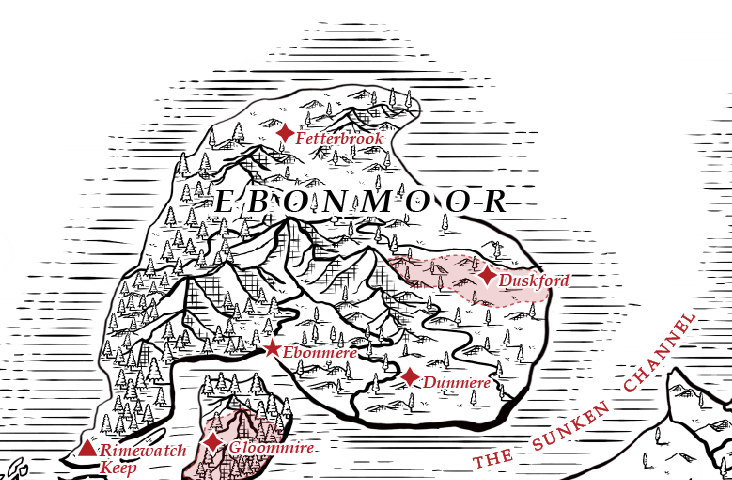

Overview
Before the Rotmire Blight, aDuskford landand transformedDunmere fromformed simplethe farmland into an agricultural powerhouse after yearscore of investmentEbonmoor. andFertile cultivation.fields, Itsreliable fertilewater, soil, abundant water supply,granaries, and organized farming estates made it a critical asset, ensuring that even during difficult seasons, Ebonmoor hadsupplied food to sustain itselfEbonmere and itssupported trade routes.beyond the island.
Whena Gloommiretime fell toafter the Blight, Duskford stood firm, untouched and prepared to endure. The destruction of theVelmere, bridgesEbonmoor's hadcontainment severedmeasures Ebonmoorappeared fromto have protected the mainland’interior. Duskford's growinglater sickness,collapse therefore caused as much suspicion as fear.
The outbreak spread rapidly. Fields, farmhouses, granaries, and forroads were abandoned, and the routes north became unsafe.
History
Duskford remained productive after the first major Blight disasters elsewhere in the region.
According to surviving accounts, a time,strange itvessel seemedwas seen offshore shortly before people began falling ill. The ship later disappeared. This story became the threatfoundation hadfor beenwidespread stopped before it could take hold. Vigilant quarantine measures, reinforced patrols, and cautious trade ensuredclaims that not a single trace of the disease entered Ebonmere or its surrounding towns. Ebonmoor, it seemed, had won.
But then the Blight came anyway.
Strangely, it did not arrive from the south, as expected. It did not creep through the marshes, nor did it follow the roads from Faulmoor. Instead, it struck Duskford directly, seemingly out of nowhere. While Ebonmere and Dunmere remained untouched, Duskford fell fast, almost unnaturally so. Before any could react, the sickness had already taken hold, spreading through the town with terrifying speed. Overnight, it was as if the Blight had appearedbeen frombrought nowhere,to severingDuskford Fetterbrookdeliberately.
Some rumors accuse mainland interests or even Baronial authorities of arranging the northoutbreak to weaken Ebonmoor. No public evidence establishes those accusations as fact.
Whatever its cause, Duskford fell quickly and cuttingits offloss anotherdramatically vitalreduced lifeline for Ebonmoor.
It was a disaster, but to some, it was also too convenient.
Rumors spread like wildfire. How had the Blight skipped over Ebonmere and Dunmere? Why had it struck so suddenly in a town that had been untouched for so long? Some whispered that it had been placed there intentionally, that the sickness had arrived not by land, but by sea—brought by a plague ship that had deliberately anchored near Duskford’s shores. None can prove it, but among the lesser nobles of Ebonmere, there are whispers that Baron Valkenmar had a hand in it—that he knew Ebonmoor had survived too well, that it had remained too independent while the rest of Faulmoor suffered. If Duskford fell, so too would Ebonmoor’Ebonmoor's food supply, forcing it to rely on the Baron’s grain stores and kneel to his rule.security.
Present Day
Now, Duskford is lost,considered lost. Former farmland is corrupted, storehouses and the once-fertile lands that surrounded itgranaries are taintedabandoned, byand Blighted remain throughout the Blight.district.
The goldensettlement's fieldsfall ofalso wheatisolated andFetterbrook barleyfrom onceits swayedformer insupply routes. Travel through the wind,ruined onlyagricultural rot remains. The Blight has warped the soil, blackening the ground with unnatural decay, leaving the land unfit for harvest. What crops remain are twisted, inedible things, tainted by whatever force has taken root beneath the earth. The great granaries and storehouses that once held Ebonmoor’s surplus are now infested with the dead, their halls silent but for the distant sound of shuffling, unseen figures lurking within.
With Duskford gone, travel north is all but impossible. Fetterbrook, once a minor but stable community,country is now completelylargely cutlimited off,to itssmugglers, survivalhunters, uncertain. The roads that once carried trade, supplies,scavengers, and messagesothers betweenwilling to accept the settlements are overrun, with only the boldest smugglers and desperate hunters daring to travel through the infected farmlands. The few who have returned tell of fields where the dead wander aimlessly, as if drawn by something unseen, and of things hiding in the silos and abandoned farmhouses, waiting in the dark for those foolish enough to approach.risk.
With Duskford lost,gone, Dunmere carries much more of the burden of feeding Ebonmoor.
Notable Locations
The Granaries
Duskford's large grain stores once held agricultural surplus for Ebonmoor. Many remain standing but are considered unsafe.
The Farmlands
The fields surrounding Duskford were among the island's most productive. They are now associated with corrupted soil, abandoned farmsteads, and wandering Blighted.
See Also
And yet, the rumors persist.
How did the